Before I posted last night I felt like I was rambling. Indeed I was. Rambling is not always bad though. I had actually been working on the post in my head for over an hour before I began writing it, so I left a few bits out. This weekend I'll get the rest of it up.
A preview of what I left out though: More about science.
Keep Learning,
Alison
Thursday, January 24, 2013

Wednesday, January 23, 2013
Why Science Education Is Important
Scientists have always been separate from the rest of the world. Sometimes it is a mutual separation, sometimes one side or the other alienates science/scientists. To clarify, I mean some scientists disconnect from the rest of the world; just as some people don't know how to connect with scientists. There are always exceptions.
Some of us try to rectify this rift. That is my goal in life. I don't understand why this rift exists and here is why.
Children are natural scientists. We are born ready to learn, yearning to learn. We look around each day and ask Why? So oft that parents get frustrated and run out of answers. Sometime the wit of a child's question strikes deep into the heart of our own questions about the universe. They have such striking clarity, just beautiful insights at times. As we get older our minds are flooded with new chemicals that distract, but as a child the whole world can be understood with the simple question of Why?
Some people maintain that very question (maybe that's why most scientists I know are very in touch with their inner child), and they tend to become any form of a detective. As a child I wished to be a detective, and each subsequent career goal I dreamed up were all seeking answers. For years (over 6) I wanted nothing more than to be an Egyptologist. I wanted to throw myself anything from Ancient Egypt, just bask in it. I still have a strong passion for Ancient Egypt, but I discovered physics, or more specifically astrophysics, in high school and something clicked.
When children lose that "Why" drive they tend to become complacent, the answers are just beyond their grasp and maybe they can never obtain them. But I don't believe that is true. If people stopped asking why, we wouldn't have any modern convenience. Sometimes the question is modified into "Why Not?" which can be just as important. Repeatively asking why is only the base of science. A real scientist knows when to pause from asking long enough to collect data and process that answer given.
I feel like everything in life that seems overwhelming should be approached with the "why." That's the foundation of psychology and sociology (these are considered "softer" sciences because the data collection is more subject to observational bias (human behavior is hard to quantify), but fundamentally they practice the scientific method). If more often people would take a deep breath and ask themselves "why" did I do this, or my family/friend/person on the street do that, they might develop a greater understanding of the world. And I think that's what sets apart scientists from other people at times. We are trained to do this about everything.
I'm not saying shut off emotion, emotion is an important part of life, but so is understand why you reacted to something. Why did you cry when you watched a sad movie, or why didn't you cry? Both are important questions.
Some questions don't have an answer, sometimes they have more questions. But that's the thrill of the chase. Asking yourself the hard questions can be wonderful. Sometimes you have to let the question hang there, like a grape on the vine, ripening. You should only pick the "fruit" when it has matured.
I have a neighbor and we constantly challenge each other. We always ask each other "why." And sometimes having someone ask you why is as important or more important that asking yourself why. I can get stuck in my head going around and around looking for answers to "Why?" but often having her ask me helps me form an answer aloud that silently I would have been stuck thinking about.
Enjoy the questions!
Alison
Wednesday, December 5, 2012
Amazing Project
Tonight I came across the most amazing thing. It's called Zooniverse. I saw a link on facebook sharing the Andromeda Project (about), where you can actually go through the images of the Andromeda Galaxy and label star clusters, distant galaxies and picture errors for the astronomers.
For those who have been out at the observatory with me, you probably know that Open Clusters are my favorite deep sky objects. This is my personal favorite that I've observed:
The point is to go through the images and help label clusters and points of interest or irregularities for the scientists. The tutorial was quick and fairly easy, they also have an added guide to help with tricky identifications and a forum (called Talk) to connect with other users.
I'm excited about this projects because of my passion for clusters, but also because it helps me give back to the researchers.
On the Zooniverse website they have 13 different science projects that you can choose to help. A majority of the projects are Astronomy based, but they also have 4 biology (3 nature, 1 health), 2 Climate and 1 Humanities projects. Also they have 3 different lab projects, 2 space and one humanities. Although one of the space one is about marine life, so it's a mix.
I plan on trying out each one and reporting back to you.
Also if you would like see what I've done in the Zooniverse suite, I have claimed the user name AskAlisonScience. I'm not sure exactly what the mechanisms are for looking at user profiles yet, but if you join and can look me up, that's my name.
Keep Learning!
Alison
For those who have been out at the observatory with me, you probably know that Open Clusters are my favorite deep sky objects. This is my personal favorite that I've observed:
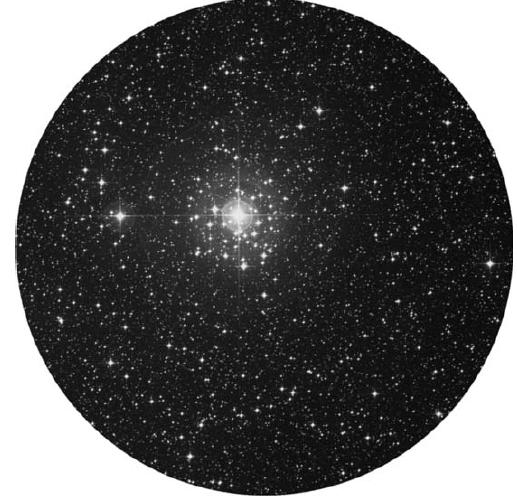 |
| NGC 2362: Located in the constellation of Taurus, the first time I found this open cluster the beauty actually took my breath away. This image cannot fully convey the wonder, but few images could ever attempt to replace looking through a telescope yourself. |
The point is to go through the images and help label clusters and points of interest or irregularities for the scientists. The tutorial was quick and fairly easy, they also have an added guide to help with tricky identifications and a forum (called Talk) to connect with other users.
I'm excited about this projects because of my passion for clusters, but also because it helps me give back to the researchers.
On the Zooniverse website they have 13 different science projects that you can choose to help. A majority of the projects are Astronomy based, but they also have 4 biology (3 nature, 1 health), 2 Climate and 1 Humanities projects. Also they have 3 different lab projects, 2 space and one humanities. Although one of the space one is about marine life, so it's a mix.
I plan on trying out each one and reporting back to you.
Also if you would like see what I've done in the Zooniverse suite, I have claimed the user name AskAlisonScience. I'm not sure exactly what the mechanisms are for looking at user profiles yet, but if you join and can look me up, that's my name.
Keep Learning!
Alison
Thursday, November 29, 2012
How to Clean Dust out of your computer without Compressed Air
Okay, Today at work a computer tower was acting up. It was covered in dust and beeping like crazy. I really don't know what's wrong with it, so I decide to start the only place I know, to clean it.
Dusk in a desktop, or even a laptop, can cause a lot of problems. I try to clean mine out once a year. Well this computer has never been cleaned. Amung all of our cleaning supplies, we do not have a can of condensed air. But I knew that we had a balloon hand pump!
I have to say, I've cleaned computers MANY times, but this was one of the fastest. I always struggle to clean the fans, but the hand pump cleaned them off within seconds. It was wonderful.
I'm going to have to get one for home. They are cheap, I just looked up the price at party city (since it's on my way home from work) and I can spend under $10 and have a few options.
Anyway I thought I would share this discovery today. I'm sorry I've been rather awol. There has been a lot going on right now and I'm just trying to focus on work and home for a time.
Never stop learning or questioning!
Alison
Monday, October 15, 2012
A Quick Astronomy Question
Q:
A: The book I would recommend is the Pocket Sky Atlas. This was the required field book for my Observational Astronomy class. Also, I would suggest learning how to use a Skymap. They can be found here, each month a new one comes out with this months events in Astronomy, and what the sky will be like on a nice clear night.
As for telescopes, there are many factors to consider.
One: What will you be using it for? How deep into the night sky do you want to see? I guarantee you won't have a view like the Hubble, but you would be surprised what you can find with a simple telescope.
Two: This is a big one. Budget. You can easily spend less than a $1,000 on a new telescope. If I could go out and buy the telescope I wanted right now I would probably spend $500-$700. (That would most likely include the accessories that I want)
When you look at telescopes there are several different styles to consider. I'm partial to reflecting telescopes, but there are also refractors. Reflecting uses mirrors, Refracting uses lenses. Both work very well, I'm just more used to reflecting
Another option to consider is the size of the aperture. Basically the larger the diameter of the barrel the better the view. Of course, the larger the barrel the less likely you are going to move it a lot.
Telescopes.com is a good resource for looking into different telescopes. They have a beginner telescopes section with prices ranging from ~$50 to ~$400. The other thing to consider is binoculars. A nice pair can be turned to the night sky and you can see a surprising amount. Actually the skymap mentioned above lists what you can see with binoculars each month as well.
So the actual recommendation? Well looking around telescopes.com, I found a reasonable one. It is a 3 inch reflecting telescope. It is a table top style, which means it is very small. But it also comes bundled with a tripod here. I'm not a huge fan of the table top style, but a lot of that depends on your viewing area and set up. If you had a tripod, it would be a lot more versatile which is what sold me on it.
To me, if you go below a three inch telescope you might as well get binoculars. The biggest limitation to using binoculars is that if you don't have a stand for them, you have a hard time sharing the view.
Good Luck,
Alison
A personal explanation
I want to apologize for my absence lately. I have been pretty divided. I realize that this is rather unprofessional of me, and I am sorry. I am human. I had intended to write another post about science news for September. I was asked a question recently about the most recently discovered comet "C/2012 S1 (ISON)." I also want to follow up on the initial Higgs article with a more indepth question I was asked.
So where have I been? Well September is a bad month. There are two things that make it very personally depressing. I spent the end of September with a friend. The first week of October I experienced an increase in my mood, but was playing catch up with house and life matters. The second week I prepared to throw a party. Now it is the third week of October. I have to work this weekend (just like I did all the other weekends with exception of this past one).
I also have been working on a new project. I have a line of jewelry I make, and I started a blog for it.
I am hoping to resume writing on here true scientific posts soon. I will most likely cover the comet question first.
Alison
Wednesday, September 19, 2012
What exactly is a Higgs?
When someone hears of the higgs search what do they think of? Black holes maybe. We all remember the rumors that the Large Hadron Collider (LHC, a particle accelerator that was built to find the Higgs particle and conduct many particle physics experiments) creating black holes and causing a panic. Well don't worry you can always check the webcams. Okay, so that's a joke, but it's amusing to me. Really if you want to know if we are okay, you should check this site. You can refresh it as much as you want.
But back to the point.
Origins (a National Science Foundation funded website committed to communicating advance science to the public) has a wonderful explanation on the Higgs Boson particle and field. As they outline it was the question "What is mass?" that lead to the search for the Higgs particle/field. We think of mass as being inherent to all matter, so how, why would we need something to explain mass? Well in science we try to ask the questions that seem easy but turn out are pretty hard. Try to answer the question what is mass. You will probably come up with a circular answer. For example:
What is mass?
Well we know that matter has mass.
Okay, what is matter?
Well matter is what makes up the universe.
And the universe is?
All matter and energy.
Well that brings us back to what is matter, or we could ask what is energy, but we would pretty much end up in circles again.
We try to explain these basic yet very complicated questions much in the same way people try to answer or communicate the idea of love. It can be tangible in a way. We could discuss the biological process of love, but that's not enough for a lot of people. What causes the process to begin anyway, pheromones? Not always. Love is a complex interaction of emotions, which are not easily quantified. But maybe that's a discussion for another day.
Back to the Higgs.
The Higgs particle was predicted by the standard model (and a man named Peter Higgs). The standard model outlines our knowledge of particle physics. It explains the particles we have discovered or predicted and the physical interactions in the universe. How can things be predicted here? Well that includes a lot of theory and math. But I found a good explanation.
Victoria Martin, a former student of Peter Higgs and current researcher at the LHC, gave a wonderful description called the "A Layperson's Guide to the Higgs Boson." Here are the highlights, slightly shortened.
This is where Higgs’ particle comes in. We can’t
figure out why the electron and the quarks have a mass; unless, somehow,
they obtain a mass by interacting in a special way with the so-called Higgs field.
If this Higgs' explanation is correct and this Higgs field really
exists and is present everywhere in the Universe, then one consequence
is that the Higgs field can clump together and form a new kind of
particle. This new particle is Higgs’ particle, which we call the Higgs
boson. To see if Higgs’ theory is really true we will need to find some
Higgs bosons and see if they really do interact with quarks, electrons
and the other fundamental particles we know about."
I only have one final note. On July 31st, 2012 this news was released, and I'll give you the punch line:
"the ATLAS Experiment submitted a scientific paper describing the discovery of a new particle consistent with the Higgs Boson."
Now in science this is going to require a LOT more testing, but it is still pretty exciting. Science is actually a really slow process sometimes, we try to be both optimistic about discoveries and cautious. We have to keep out method in tact and repeat experiments including letting other teams of scientists repeat them. Only after many people have concluded the same things can we truly feel safe making a revolutionary statement. So I present that news with excitement and baited breath waiting for more testing.
I'm going to let it rest here. Let me know if anything need clarification.
Alison
But back to the point.
Origins (a National Science Foundation funded website committed to communicating advance science to the public) has a wonderful explanation on the Higgs Boson particle and field. As they outline it was the question "What is mass?" that lead to the search for the Higgs particle/field. We think of mass as being inherent to all matter, so how, why would we need something to explain mass? Well in science we try to ask the questions that seem easy but turn out are pretty hard. Try to answer the question what is mass. You will probably come up with a circular answer. For example:
What is mass?
Well we know that matter has mass.
Okay, what is matter?
Well matter is what makes up the universe.
And the universe is?
All matter and energy.
Well that brings us back to what is matter, or we could ask what is energy, but we would pretty much end up in circles again.
We try to explain these basic yet very complicated questions much in the same way people try to answer or communicate the idea of love. It can be tangible in a way. We could discuss the biological process of love, but that's not enough for a lot of people. What causes the process to begin anyway, pheromones? Not always. Love is a complex interaction of emotions, which are not easily quantified. But maybe that's a discussion for another day.
Back to the Higgs.
The Higgs particle was predicted by the standard model (and a man named Peter Higgs). The standard model outlines our knowledge of particle physics. It explains the particles we have discovered or predicted and the physical interactions in the universe. How can things be predicted here? Well that includes a lot of theory and math. But I found a good explanation.
Victoria Martin, a former student of Peter Higgs and current researcher at the LHC, gave a wonderful description called the "A Layperson's Guide to the Higgs Boson." Here are the highlights, slightly shortened.
"So what is this particle Higgs invented? We
particle physicists investigate the properties of fundamental subatomic
particles. Just as everything is made of molecules and those molecules
are made of atoms, it turns out those atoms themselves are made of more
fundamental particles: electrons, protons and neutrons. We believe the
electron is a truly fundamental particle: it isn’t built up of smaller
building blocks. However we know that the protons and neutrons are not
fundamental; they consist of three even smaller particles we call
“quarks”.
I only have one final note. On July 31st, 2012 this news was released, and I'll give you the punch line:
"the ATLAS Experiment submitted a scientific paper describing the discovery of a new particle consistent with the Higgs Boson."
Now in science this is going to require a LOT more testing, but it is still pretty exciting. Science is actually a really slow process sometimes, we try to be both optimistic about discoveries and cautious. We have to keep out method in tact and repeat experiments including letting other teams of scientists repeat them. Only after many people have concluded the same things can we truly feel safe making a revolutionary statement. So I present that news with excitement and baited breath waiting for more testing.
I'm going to let it rest here. Let me know if anything need clarification.
Alison
Subscribe to:
Posts (Atom)