Sections

Showing posts with label biology. Show all posts

Wednesday, December 5, 2012

Amazing Project

Tonight I came across the most amazing thing.  It's called Zooniverse.  I saw a link on facebook sharing the Andromeda Project (about), where you can actually go through the images of the Andromeda Galaxy and label star clusters, distant galaxies and picture errors for the astronomers. 

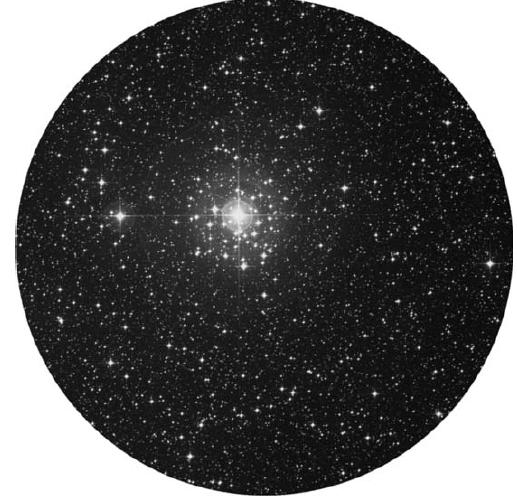
For those who have been out at the observatory with me, you probably know that Open Clusters are my favorite deep sky objects. This is my personal favorite that I've observed:
NGC 2362:  Located in the constellation of Taurus, the first time I found this open cluster the beauty actually took my breath away.  This image cannot fully convey the wonder, but few images could ever attempt to replace looking through a telescope yourself.

The point is to go through the images and help label clusters and points of interest or irregularities for the scientists.  The tutorial was quick and fairly easy, they also have an added guide to help with tricky identifications and a forum (called Talk) to connect with other users.

I'm excited about this projects because of my passion for clusters, but also because it helps me give back to the researchers.

On the Zooniverse website they have 13 different science projects that you can choose to help.  A majority of the projects are Astronomy based, but they also have 4 biology (3 nature, 1 health), 2 Climate and 1 Humanities projects.  Also they have 3 different lab projects, 2 space and one humanities.  Although one of the space one is about marine life, so it's a mix.
I plan on trying out each one and reporting back to you. 

Also if you would like see what I've done in the Zooniverse suite, I have claimed the user name AskAlisonScience.  I'm not sure exactly what the mechanisms are for looking at user profiles yet, but if you join and can look me up, that's my name.

Keep Learning!
Alison

Thursday, September 6, 2012

Top 10...Errr, Top 4.5 Science Links For August

Here are my top 4.5 favorite articles I've read online this past month.  With them I've included a brief summary and why I enjoyed it.  (Note, they are not really ranked, I enjoyed all of them, so the numbers are just to keep track.)  I was going to do top 10, but the month got away from me, with the move.  The reason it is 4.5 is because I included another link without comment.  Perhaps we could have a discussion about link 4.5?  Read it, and let me know if you have any questions.

     This article discusses the recent discovery of planets orbiting a binary star system.  We've seen this type of system in the movies but this is the first time we have observed multiple planets around a system like this.  This discovery was made by the Kepler Mission, a NASA mission to discover exoplanets (planets orbiting other stars.  (exo-meaning outside of our solar system) AKA extrasolar planets).  Why did I include this?  Well not only is this REALLY COOL science, but it pushes our understanding of how a solar system forms.
     Remember, science is like cleaning out a closet, the room is going to get messy when you pull all the stuff out of the closet, but in the end everything is better.  Asking questions in science is the same way, the answer you think you are going to get is often not there, instead you find more questions which you must then answer. 
    Why I loved this article is because it highlights an interesting side of science.  Basically this:  Scientists like small easy to manage problems.  Sounds good right?  The problem is that the real world is very interconnected, there are a lot of variables that are hard to manage and to measure all of them all the time.  This is one reason that the weather report is highly variable.  Calling for rain all week?  Well it was cloudy Monday...  Then it was sunny all week.  There are many global variables to track in weather prediction.  The same is true for all areas of science.  When you get down to real world systems there are truly thousands (if not infinite) of variables to keep track of.  
     In medicine, not only what the person eats, how much they exercise, what kinds of exercises, bathroom habits, sleep patterns, stress levels, emotional stability, family history, genetics, home life, weather, air quality, levels of communication between the patient and the doctor, etc all effect the delicate balance of human life.  It is nearly impossible to always account for all these things when treating someone. 
     One of my favorite books is A Brave New World and this reminded me of that.  I have always found the idea of learning while sleeping fascinating.  I love learning and would love to do it around the clock.  However learning to sniff when I hear a specific noise isn't what I was going for.  That doesn't mean this isn't a cool study, it is very cool.  Of course I instantly thought of Pavlov's dog (Pavlovian conditioning) when I read this. 
      Side note: In A Brave New World they use hypnotic conditioning of children to teach their beliefs while the children are asleep.  That's why I thought of it.
     Chemical exposure during development can be very complicated.  When the embryo's cells are developing they are more reactive than an adult's cells.  In the early stages especially when the cell signaling is crucial.  From one cell we get millions that end up being sectioned off into to different organ types.  This means that from early signals the cells begin to organize and form the first tissues of the babies.  This is why chemical exposure can have such a dramatic effect, cells signal each other with chemicals.  The likely conclusion here is that the exposure to PFCs stimulates fat storing cell production.  Of course this is just my educated guess, I have not done any personal research into this.
So let me know if there are any questions/comments about 4.5 (Or any of them of course). I would love to clear anything up or start a discussion.

What's on tap for this month?  Well I plan on doing a Top ten list at the end of the month/beginning of October.  Since I have a few Astronomy programs scheduled I will be doing an Astronomy related post.  Also, I want to get some serious work done on a particle physics entry that I promised I would write.

Keep your questions coming.
Alison
Thursday, August 23, 2012

Reptile Trivia

I'm posting this really late, the move took it's toll.  I'm back at work in the science center today so I thought I would catch up with this post.  I plan on having a newly researched post next week and hopefully my top links for the month.

Today (August 8th, 2012) during Reptile summer camp, we played a trivia game.  I typed up the questions, so I shall share them.  Some of them are very specific to the camp, but some of them are general knowledge.

  1. Which reptile still has their teeth showing when they close their mouths?
    1. Crocodiles
  2. What continent was the viper from yesterday?
    1. Asia
  3. What is the theme of this class?
    1. Reptiles
  4. T/F: SC has crocodiles in our swamps.
    1. False
  5. T/F: All turtles can pull their necks into their shells?
    1. False
  6. T/F: All turtles have webbed feet?
    1. True
  7. What was the first snake pulled out today?
    1. Great plain rat or Corn.
  8. What country was Daisy, David's snake, native to?
    1. Kenya
  9. What are two main differences between a turtle and a tortoise shell?
    1. Weight and Shape.
  10. What is the difference between the Corn snake and the Great Plains Snake?
    1. Coloring.
  11. T/F: The Science Center has Venomous snakes.
    1. False.
  12. What is a box turtle?
    1. Tortoise.
  13. What is a terrapin?
    1. Mix between turtle and tortoise: Lives in water and on land.
  14. What reptile is a good mother?
    1. Alligator.
  15. Where is the pattern the same for both the Corn and the Great Plains snake?
    1. Belly/bottom
  16. Who won the race on Monday?
    1. Box Turtle.
  17. What type of turtle was the last shown yesterday?
    1. Sunburst turtle.
  18. T/F: Snakes are warm blooded?
    1. False.
  19. T/F: The black snake has the same pattern on his belly as the Corn snake?
    1. True.
  20. Who was the first kid of the summer to hold three snakes at once?
    1. Jason.
  21. How far south can we find corn snakes?
    1. 30 miles south of Spartanburg SC.
  22. What is the current count of sea turtle nests in SC?
    1. 4,367
  23. Which island had eleven hundred and one sea turtle nests?
    1. Cape Island
  24. When do sea turtles nest?
    1. Night.
  25. When is the end of the sea turtle nesting season?
    1. Tonight, tomorrow, last night, pretty much now.
  26. When does nesting season begin?
    1. Mid of May.
  27. Where do the eggs live in the nest?
    1. The egg chamber.
  28. How many eggs can a sea turtle lay at once?
    1. 150 eggs
  29. T/F: Leather back sea turtles are very common.
    1. False.
  30. T/F: Leather back sea turtles can weight about 1000 lbs.
    1. True.
  31. Can turtles/tortoises live without their shells?
    1. No!
  32. What is it called when fishermen use nets that are miles long?
    1. Long Line fishing.
  33. When fishermen catch something that they don't want while fishing for something else, what is it called?
    1. Bi-catch.
  34. South Carolina's state reptile is?
    1. Loggerhead Sea Turtle
  35. T/F: Cape Island is open to the public during nesting season.
    1. False.
  36. What date did the sea turtles begin nesting this year?
    1. April 30th.
  37. When will the nests be finished hatching?
    1. By the end of September/1st of October.
  38. What was the first predator to go after the baby alligator on the video yesterday?
    1. Skunk.
  39. T/F: There are snakes called Queen snakes.
    1. True.
  40. What do Queen snakes eat?
    1. Soft crayfish, they freshly shed their exoskeleton.
  41. What's David's favorite snake?
    1. Red tailed Boa.
  42. Do snakes get hungry after they shed?
    1. Yes.
  43. Can snakes bite you, even if they are not venomous?
    1. Yes, they have teeth. But that doesn't mean they will.
  44. What type of snake did David bring today?
    1. Red tail boa.
  45. How many snakes does David own?
    1. 30
  46. How many snakes has David brought in?
    1. 4.
  47. Which is longer, a crocodile or a caiman lizard?
    1. Crocodile.
  48. In snakes, which are larger, male or female?
    1. Female.
  49. In turtles, which is larger, male or female?
    1. Female.
  50. What is my favorite turtle?
    1. Sunburst turtle.

Monday, July 30, 2012

Breaking news! Or not....

Well it was brand new in February...

So this afternoon I am teaching for an hour in the Fossils and Dinosaurs camp.  Prepping for this, I was looking at some interesting videos.  I found this Nova program (Ice Age Death Trap) that premiered in February.  I wish I could show the whole thing to the kids (mostly because I want to see all of it), however it's a little long for this age group.  Instead I'm going to show them these three videos.

Video 1 is about Evolution seen in salamanders in California.  It's pretty cool.
Video 2 is about this interesting Prehistoric crocodile found in Tanzania. 
Video 3 is the PBS evening news segment on the Ice Age Death Trap  video.

Enjoy!

Friday, July 20, 2012

Why are Moths attracted to Light?

Most of my research as lead me to this conclusion:  They are not.  Not strictly speaking anyway. 

There are several different thoughts on why they seem to be though.

The first theory (T1) is they get confused by lights.  It seems that nocturnal moths use light for navigation.  Before we lit up the night with light polls, porch lights, and all the other lights we felt compelled to use at night; moths are said to have used the moon for navigation.  Our lights are brighter if they approach it, therefore they use it to navigate by rather than the moon.

Another theory (T2) is the moths are confused by the light because they are trying to get to the darkest spot next to the light.  This is due to "Mach Bands" (in the image below) where a color difference looks strongest at the point of highest contrast.  Meaning that the world looks darkest next to the light.  They are seeking the darkness and the bright light throws them off.  One scientist, Henry Hsiao, observed moths veering away from the light once they got close to it as they rarely actually bump into the light.


For some species of moth we have a third theory (T3) is moths just respond to different wavelengths (or color) of light differently.  This is why you are more likely to see moths around a white light than a yellow light.  One possible explanation of this is their food source.  They often eat the nectar from flowers, similar to butterflies.  Some flowers reflect ultraviolet light.  Ultraviolet light (UV) is a light that we cannot see as it is boarding the visible range.  Some insects like moths and bees can see in the UV range.  This means it is possible that they are approaching the light seeking out food rather than the light itself.

It seems that whatever the cause once they get to the light they are confused.  The reason they are seen sleeping near the light has two theories.
One: They often sleep as a reflex to the brightness mimicking the sun.
Two:  They merely tire themselves out flying around the light so they go to sleep on a near by surface.

A final note on moths: Not all moths are nocturnal.

References
T1 Links:
Penn State Research
Wikipedia
T2 Links:
io9
T3 Links:
How Stuff Works
Penn State Research

Monday, June 11, 2012

The First Question To Be Answered Is...

Why are moths attracted to light?

I was sitting in my living room watching a moth bounce against the window trying to get closer to the light inside. At the same time I found myself wondering what my first blog post should be.  I found it fitting that I should start this blog off with a question that I don't know myself.  So I will do some research tonight and post the answer tomorrow.

I look forward to learning something new with you.
Alison